Seventeen
The Bell JarSeventeen is the magazine that first published Sylvia Plath’s short fiction and poetry, helped bring her to New York as a college guest editor, and supplied a real-life model for the contest-sponsored magazine world in The Bell Jar. Its importance lies in that double role: it offers young women a route toward authorship while presenting achievement through commercial glamour, a promise the novel sets against Esther Greenwood’s numbness and disillusionment.
Publication and Early Recognition
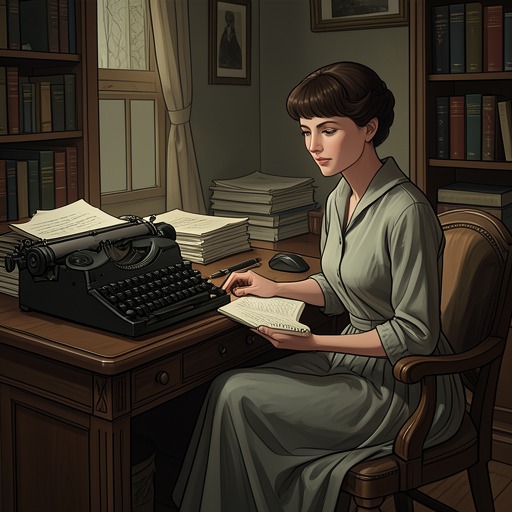
Plath began submitting work to Seventeen while still in high school. After forty-five submissions, the magazine published her short story “And Summer Will Not Come Again” in August 1950. That same month, the Christian Science Monitor accepted her poem “Bitter Strawberries,” but Seventeen remained a significant venue in the early record of her persistence as a writer. The repeated submissions make publication a hard-won opening rather than an effortless reward.
At Smith College, Plath continued to publish stories and poems in Seventeen while maintaining a disciplined writing practice and earning academic honors. In August 1951, she won the magazine’s fiction contest with “Sunday at the Mintons.” The prize preceded her selection, the following summer, for a guest editorship through Mademoiselle’s College Board Contest. The sequence shows how a magazine contest could connect student writing to a larger professional-facing opportunity, even as recognition did not remove the self-doubt Plath described during those successful college years.
The College Contest and New York
The novel recasts the magazine world through Esther, one of twelve college women who win a fashion-magazine contest by writing essays, stories, poems, and fashion blurbs. Their prize is a month of paid expenses and New York jobs, accompanied by a stream of bonuses: ballet tickets, fashion-show passes, salon hair styling, introductions to people in the field, and advice about complexions. The arrangement mixes work and promotion; the gifts also advertise the firms that provide them.
The magazine’s public image is built from polished scenes. Esther imagines her photograph in a silver-lamé bodice and white tulle, drinking martinis beside young men selected for their all-American looks. Readers, she thinks, will see a poor girl from an out-of-the-way town who won scholarships and prizes and now seems to be steering New York like a private car. Her actual days move between hotel, office, and parties without a sense of control. The distance between the advertised success story and Esther’s empty, unresponsive experience makes the magazine’s promise both attractive and inadequate.
The novel gives this commercial world physical keepsakes. Esther recalls a make-up kit arranged for brown eyes and brown hair: brown mascara with a tiny brush, blue eyeshadow, and three lipsticks in a gilt box with a mirror. She also retains a white plastic sunglasses case decorated with shells, sequins, and a sewn-on green starfish. At first she enjoys the gifts; later, after she is well again, she brings them back out, uses the lipsticks, and cuts off the starfish for a baby to play with. The objects outlast the promotional moment, but their later domestic use alters their meaning.
Food, Fashion, and Manufactured Images
A Ladies’ Day luncheon extends the novel’s attention to magazine production. Before the meal, the contest winners tour glossy kitchens where apple pie à la mode must be staged under bright lights: melting ice cream is propped up with toothpicks and replaced when it looks too soft. Esther sees how an image of abundance is manufactured through labor and correction. The display also recalls the economy-conscious meals of her childhood, where a grandmother’s reminder that Sunday roast cost forty-one cents a pound made eating feel like consuming pennies.
The magazine’s visual conventions connect with Esther’s dislike of Technicolor films. She objects to their lurid costumes and exaggerated landscapes, and to a football romance that sorts its women into the respectable heroine who gets the football hero and the sexually desirable rival left without a husband because her suitor wanted a mistress. That familiar plot gives popular images a gendered moral pattern: desirability is not the same as security, and marriage remains the measure by which the women’s endings are judged. The magazine’s fashion spectacle and the film’s color-saturated romance belong to a wider culture that packages women’s aspiration as an attractive, carefully arranged scene.
Career, Gender, and Retrospective Meaning
The biographical afterword places Seventeen within a broader record of Plath’s writing life, but it does not make the novel a transparent account of her experience. Plath’s real contest success and guest editorship provide points of correspondence; The Bell Jar transforms magazine work and New York glamour into Esther’s particular experience. The book’s narrator sees the prizes and publicity from within a breakdown, while the biographical account records the excitement Plath herself described in her scrapbook about a month of salaried work, editing, celebrity encounters, and feasts. The contrasting accounts preserve both opportunity and strain without making the fictional Esther and the historical writer interchangeable.
The magazine’s significance therefore exceeds its role as a first publisher or career stepping-stone. It represents access to print and professional recognition, yet its contests, gifts, photographs, and fashion imagery also make women’s achievement legible through consumption and appearance. The Bell Jar holds those functions together: the magazine can open a door for a young writer, while its bright surface becomes a measure against which Esther’s alienation appears more starkly.